


Most conversations about GLP-1 medications begin with body weight.
How much weight will I lose?
How quickly will it happen?
Will I regain it if I stop?
Those are reasonable questions. But they can obscure a more important clinical point:
Key point
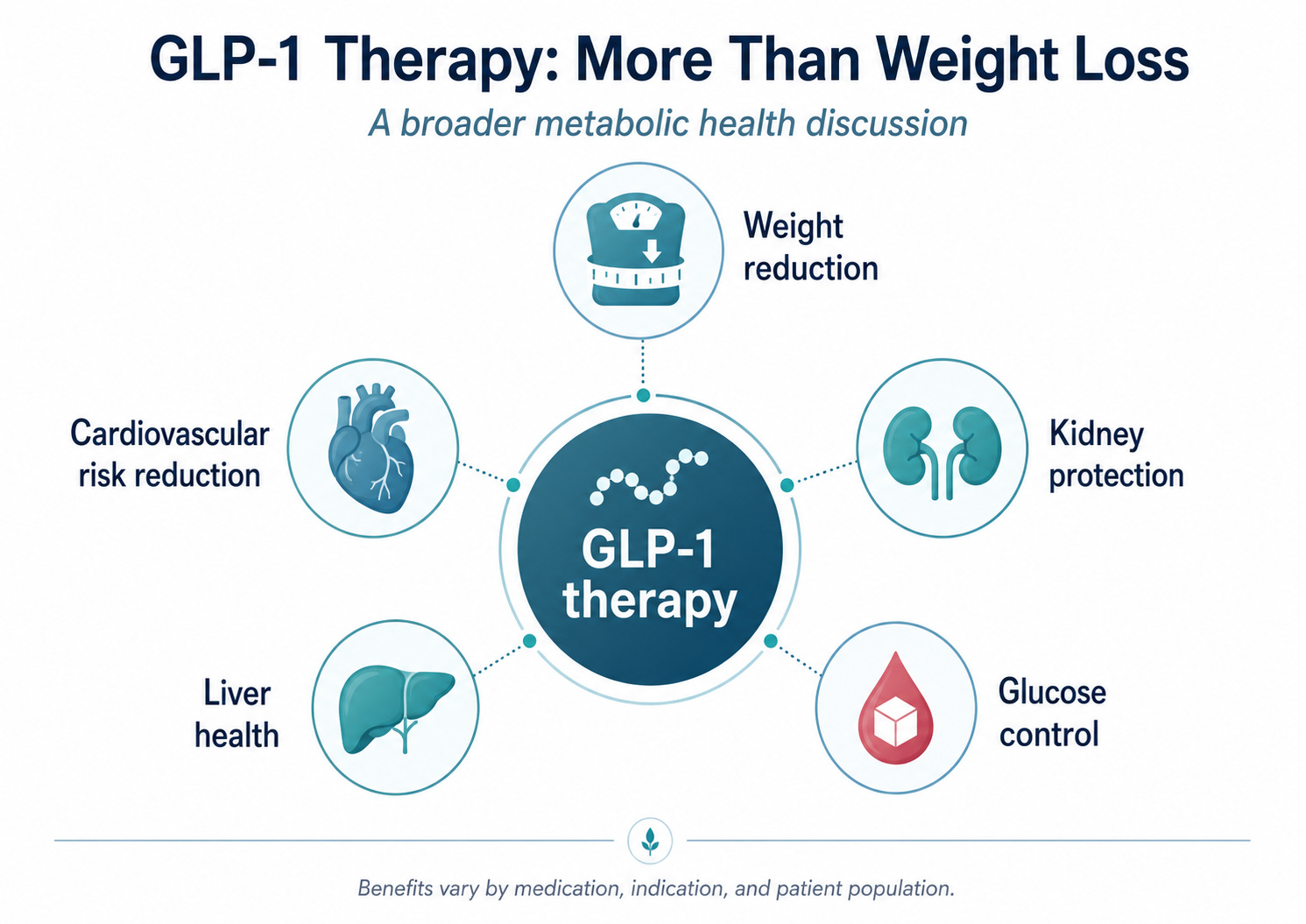
For appropriately selected patients, certain GLP-1 receptor agonists have demonstrated benefits that extend beyond the scale, including fewer major cardiovascular events, slower progression of chronic kidney disease, and improvement in serious metabolic liver disease.
That does not mean everyone should take one.
It does not mean lifestyle habits no longer matter.
It does not mean every medication in this broad category has proved every possible benefit.
Most of the outcome evidence discussed below is specific to semaglutide and should not be assumed to apply equally to every GLP-1 receptor agonist.
It does mean we should stop evaluating these medicines only by the number of pounds lost.
Cardiovascular disease changes the conversation
For years, weight-loss medications were judged mainly by how much weight they helped people lose.
The SELECT trial changed that conversation.
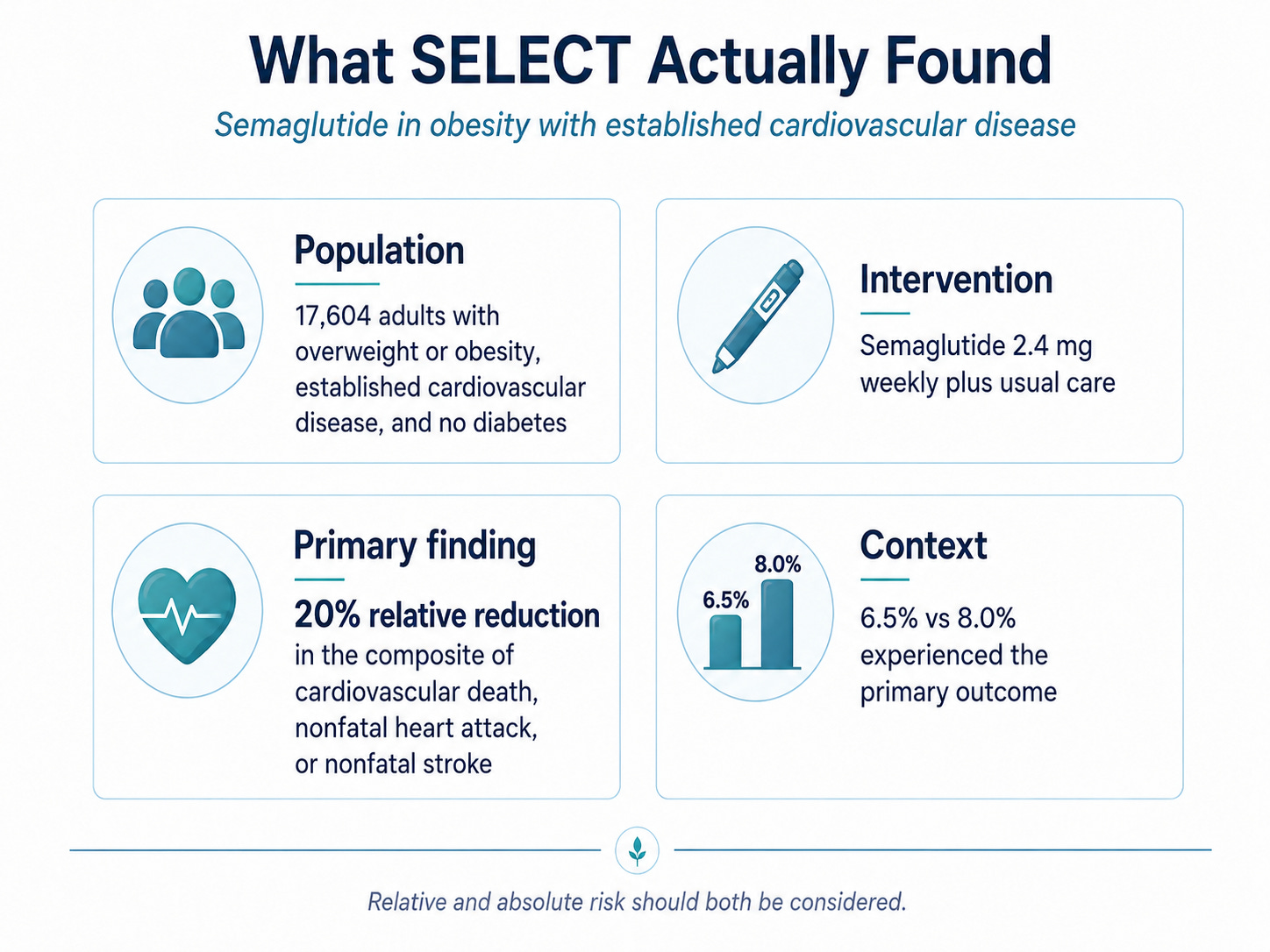
SELECT enrolled 17,604 adults who:
Had overweight or obesity
Had established cardiovascular disease
Did not have diabetes
Participants were randomized to receive once-weekly semaglutide 2.4 mg or placebo in addition to usual care.
Over approximately 40 months of follow-up, semaglutide reduced the relative risk of the primary cardiovascular outcome by 20%.
The primary outcome was a composite of:
Cardiovascular death
Nonfatal heart attack
Nonfatal stroke
The outcome occurred in:
6.5% of participants receiving semaglutide
8.0% of participants receiving placebo
Semaglutide therefore did more than improve body weight or a laboratory measurement. It reduced major cardiovascular events in a high-risk population without diabetes. (New England Journal of Medicine)
Relative risk is not the same as absolute risk
The 20% figure describes a relative reduction.
The absolute difference between the two groups was approximately 1.5 percentage points during the trial.
Both numbers matter.
Relative risk describes the proportional difference between the groups. Absolute risk helps us understand the size of the benefit in the population studied.
The potential benefit is generally greater in people who already have substantial cardiovascular risk. These findings should not automatically be applied to every person who wants to lose a relatively small amount of weight.
What about stroke?
An earlier cardiovascular outcomes trial called SUSTAIN-6 studied semaglutide in adults with type 2 diabetes who were at high cardiovascular risk. SUSTAIN-6 tested lower weekly doses of semaglutide (0.5 mg and 1.0 mg) than the 2.4 mg dose used in SELECT.
Nonfatal stroke occurred in:
1.6% of participants receiving semaglutide
2.7% of participants receiving placebo
The hazard ratio was 0.61, corresponding to an approximately 39% relative reduction.
That finding is clinically important, but it needs context.
Stroke was a component outcome rather than the trial’s primary endpoint. The trial was not designed to prove that semaglutide reduces stroke by exactly 39% in every population.
The finding came from a specific group of adults with type 2 diabetes and high cardiovascular risk. It should not be interpreted as a guaranteed reduction for every person taking semaglutide. (PubMed)
Semaglutide also does not replace:
Blood pressure control
Lipid management
Smoking cessation
Physical activity
Diabetes management
Antiplatelet therapy when indicated
Evaluation of atrial fibrillation and other stroke risks
The correct message is not that a GLP-1 medicine prevents every stroke.
The message is that randomized trials have demonstrated cardiovascular effects that are difficult to dismiss as merely cosmetic weight loss.
Kidney protection may be just as important
Chronic kidney disease and type 2 diabetes frequently occur together.
Once both are present, the risks of kidney failure, cardiovascular events, and premature death rise substantially.
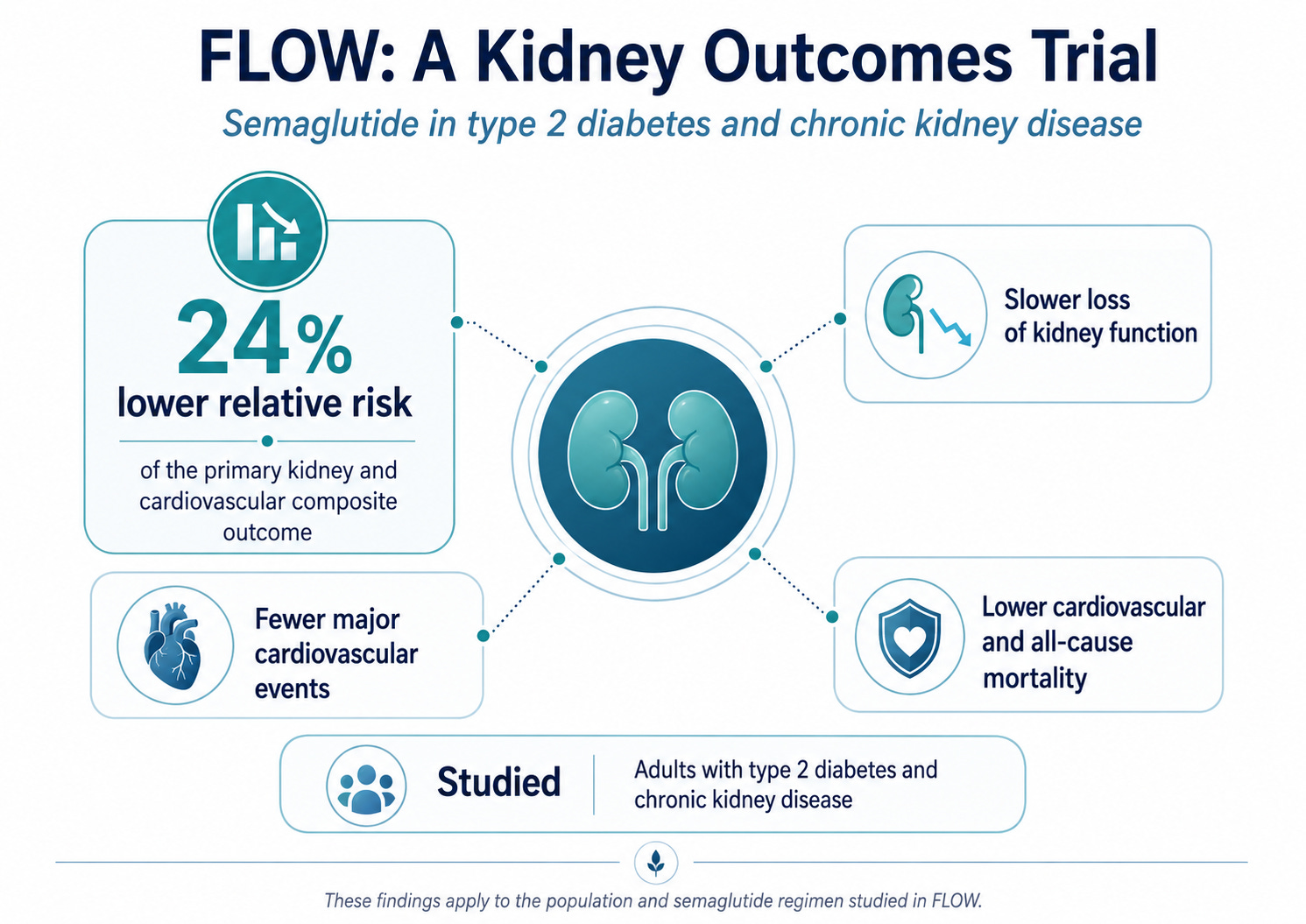
The FLOW trial evaluated once-weekly semaglutide 1.0 mg in adults with:
Type 2 diabetes
Chronic kidney disease
High risk of kidney disease progression
The primary outcome combined major kidney events and death from cardiovascular or kidney-related causes.
Semaglutide reduced the relative risk of the primary outcome by 24% compared with placebo.
The trial also found:
Slower decline in estimated glomerular filtration rate, or eGFR
An 18% relative reduction in major cardiovascular events
A 20% relative reduction in death from any cause
FLOW was not simply a glucose-lowering trial with a few kidney measurements added afterward.
It was a dedicated kidney outcomes trial. (PMC)
Additional FLOW analyses also found fewer heart-failure events and cardiovascular deaths among participants receiving semaglutide. (JACC)
The results support a broader view of treatment in selected patients with diabetes and chronic kidney disease.
The goal is not simply to lower the A1c.
The goal is to reduce the risk of kidney failure, cardiovascular events, disability, and premature death.
The liver is also part of the metabolic picture
The American Heart Association’s cardiovascular-kidney-metabolic, or CKM, framework focuses on the interactions among metabolic risk factors, chronic kidney disease, and the cardiovascular system. (AHA Journals)
Metabolic dysfunction-associated steatotic liver disease, or MASLD, and metabolic dysfunction-associated steatohepatitis, or MASH, are not part of the formal CKM acronym.
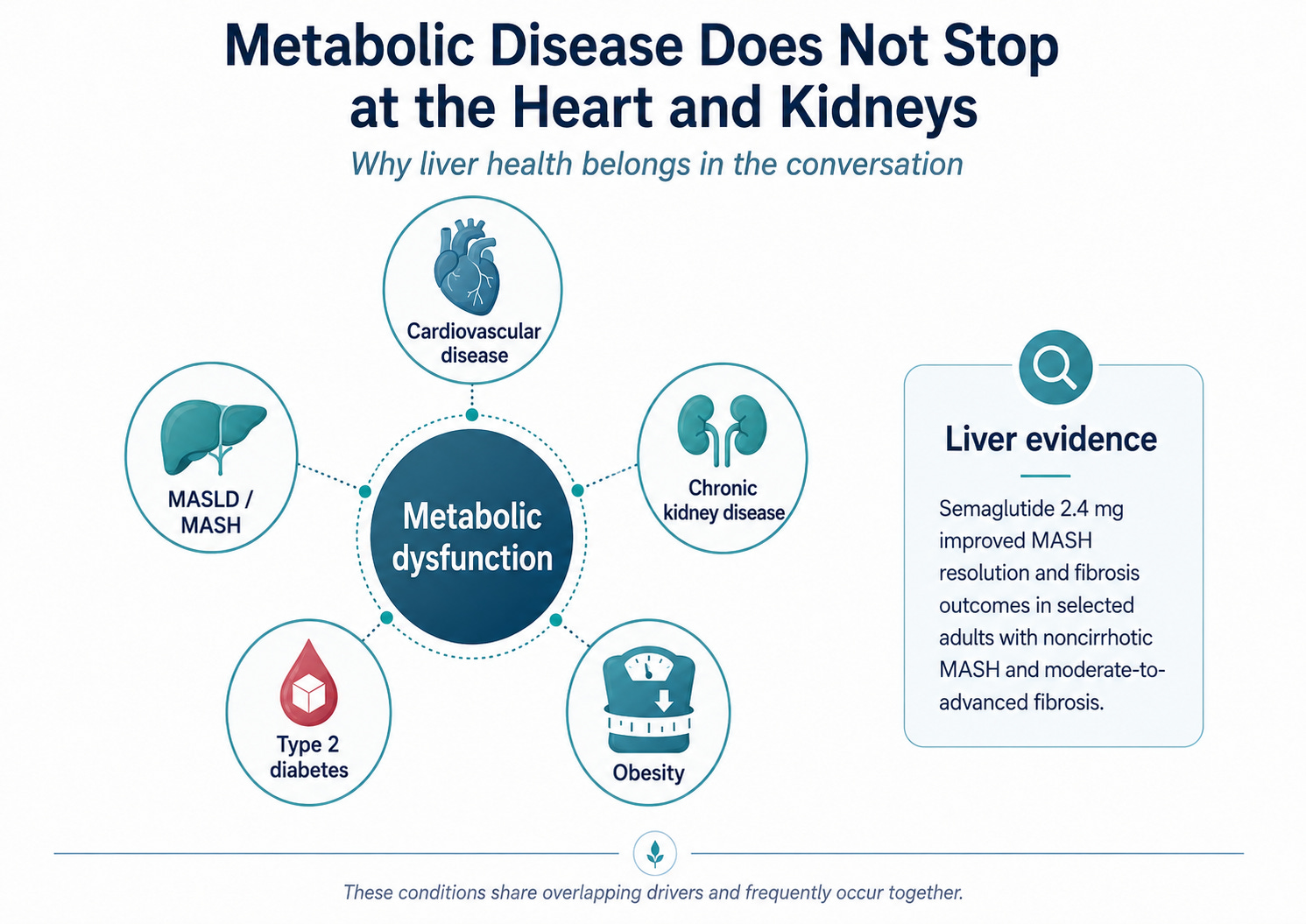
But they share many of the same underlying drivers:
Excess or dysfunctional adipose tissue
Insulin resistance
Type 2 diabetes
Abnormal lipid metabolism
Hypertension
Systemic inflammation
Cardiovascular disease
Some people with MASLD progress to MASH, which includes liver inflammation and injury. MASH can lead to progressive fibrosis, cirrhosis, liver failure, transplantation, and liver-related death.
What ESSENCE found
The phase 3 ESSENCE trial evaluated once-weekly semaglutide 2.4 mg in adults with MASH and moderate-to-advanced liver fibrosis, corresponding to stages F2 through F3.
At 72 weeks:
62.9% of participants receiving semaglutide had resolution of MASH without worsening of fibrosis
34.3% of participants receiving placebo reached that outcome
Improvement in fibrosis without worsening of MASH occurred in:
36.8% of participants receiving semaglutide
22.4% of participants receiving placebo
These findings were important because earlier studies had demonstrated improvement in steatohepatitis but had been less convincing regarding fibrosis. (New England Journal of Medicine)
FDA approval
On August 15, 2025, the FDA granted accelerated approval to Wegovy, which contains semaglutide, for adults with:
Noncirrhotic MASH
Moderate-to-advanced liver fibrosis
Fibrosis stages F2 through F3
The approval was based on improvement in liver histology.
Continued approval may depend on confirmation that treatment improves longer-term clinical outcomes such as progression to cirrhosis, liver transplantation, liver-related complications, or death. The ongoing trial is planned to continue for 240 weeks. (U.S. Food and Drug Administration)
This does not mean semaglutide should be used for every person with fat in the liver.
The approved population has MASH with clinically significant fibrosis, not uncomplicated steatosis alone.
Weight loss likely contributes substantially to liver improvement. In ESSENCE, participants receiving semaglutide lost considerably more weight than those receiving placebo.
The most accurate conclusion is not that semaglutide directly reverses liver disease through a completely weight-independent mechanism.
The important clinical result is that, in appropriately selected patients, semaglutide improved both MASH resolution and liver fibrosis outcomes.
The liver should not be treated as an isolated organ.
It is another place where metabolic dysfunction becomes visible.
Are the cardiovascular benefits caused only by weight loss?
This is where the evidence becomes more nuanced.
Weight loss itself can improve:
Blood pressure
Glycemic control
Insulin resistance
Sleep apnea
Systemic inflammation
Lipid abnormalities
Visceral adiposity
Mechanical stress on the body
It would be unreasonable to claim that weight loss contributes nothing to the cardiovascular benefit.
However, a prespecified analysis of SELECT found that semaglutide reduced major cardiovascular events across different baseline body-weight and waist-circumference categories.
Among participants receiving semaglutide, the amount of weight lost by week 20 was not linearly associated with the subsequent risk of a major cardiovascular event.
Reduction in waist circumference was associated with lower cardiovascular risk, and mediation analysis estimated that approximately 33% of the observed cardiovascular benefit was mediated through reduced waist circumference. (The Lancet)
The trial investigators concluded that semaglutide’s cardioprotective effect was largely independent of baseline adiposity and weight loss, with only a small association with waist-circumference reduction. That points to mechanisms of benefit beyond fat loss.
That suggests reduced adiposity contributes to cardiovascular protection but does not fully explain the observed effect.
Mediation analyses have limitations. They cannot prove that semaglutide has a completely direct or weight-independent cardiovascular mechanism.
The observed benefits are probably multifactorial and may involve interacting changes in:
Blood pressure
Glycemic regulation
Visceral and ectopic fat
Endothelial function
Inflammation
Lipid metabolism
Atherosclerotic biology
Physical function
Other metabolic pathways
The most defensible conclusion
Weight loss and reduced adiposity likely contribute to the cardiovascular benefit, but they do not appear to explain the entire treatment effect. That is more accurate than claiming the cardiovascular benefits are completely independent of weight loss.
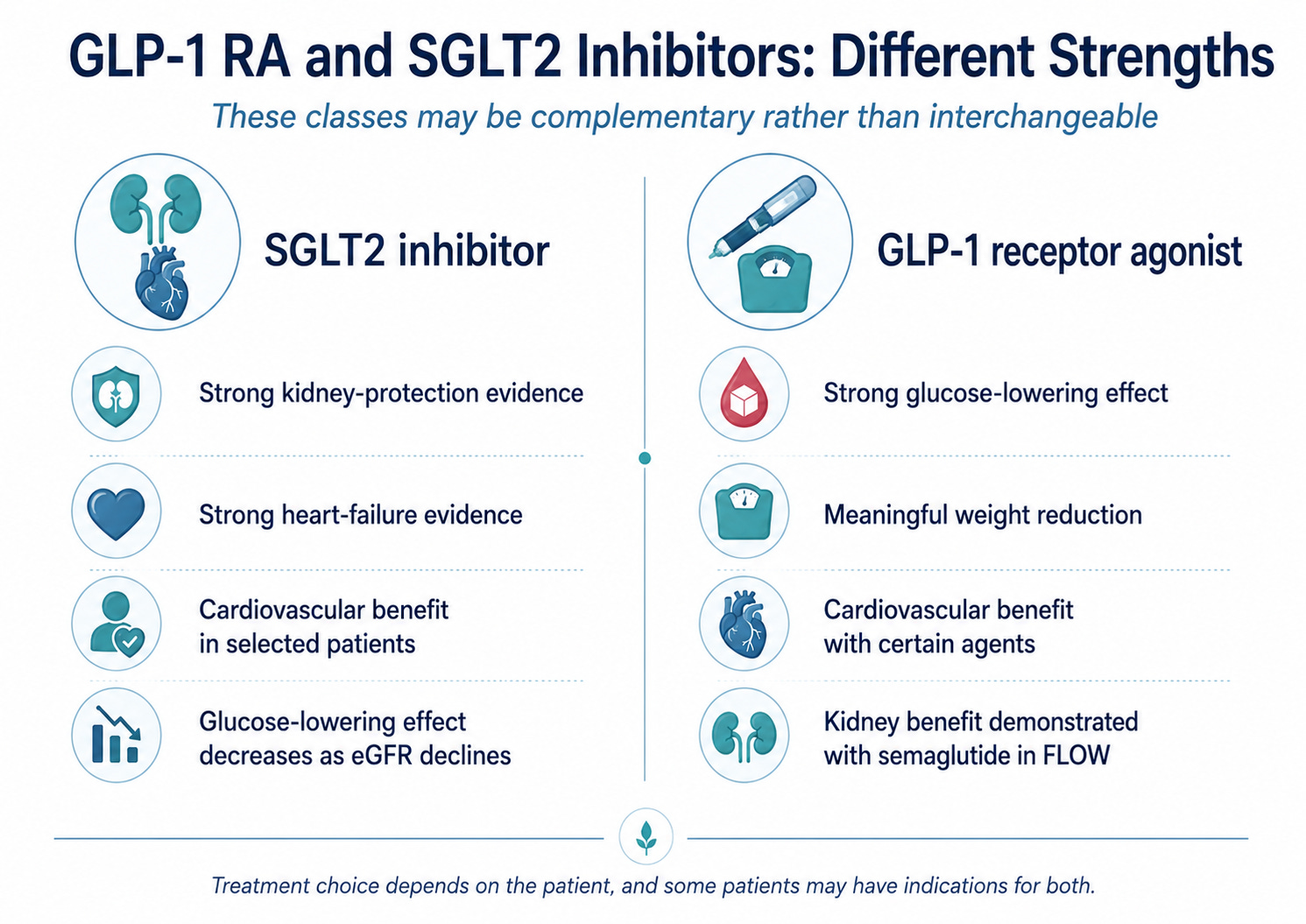
GLP-1 medicines and SGLT2 inhibitors are not interchangeable
This discussion can create a false competition between GLP-1 receptor agonists and sodium-glucose cotransporter-2 inhibitors, commonly called SGLT2 inhibitors.
That is the wrong frame.
For many adults with type 2 diabetes, chronic kidney disease, or heart failure, SGLT2 inhibitors remain foundational because they have strong evidence for:
Slowing chronic kidney disease progression
Reducing heart-failure hospitalization
Lowering cardiovascular risk in selected populations
Their glucose-lowering effect diminishes as eGFR declines, although the exact threshold varies by medication and indication.
For example, dapagliflozin is not recommended specifically for improving glycemic control when eGFR is below 45 mL/min/1.73 m², while the corresponding threshold for empagliflozin is below 30 mL/min/1.73 m². (FDA Access Data)
Reduced glucose-lowering efficacy does not mean the medication has stopped protecting the heart or kidneys.
The kidney and cardiovascular benefits can remain clinically important even when the change in blood glucose becomes modest.
GLP-1 receptor agonists may provide additional value, particularly when a patient also needs:
Better glycemic control
Meaningful weight reduction
Cardiovascular risk reduction
Additional kidney protection
Treatment of qualifying MASH with fibrosis
For some high-risk patients, the question is not: Should we use an SGLT2 inhibitor or a GLP-1 receptor agonist?
The better question may be: Does this patient have indications for one, the other, or potentially both?
That decision depends on the individual patient’s:
Kidney function
Albuminuria
Cardiovascular disease
Heart-failure history
Glycemic status
Weight-related risk
Liver disease
Medication tolerance
Contraindications
Cost and insurance coverage
Treatment preferences
These medications do not replace the foundations
Medication can reduce risk, but it does not make the rest of the treatment plan irrelevant.
Patients using GLP-1 therapy still benefit from attention to:
Resistance training
Aerobic activity
Adequate protein and overall nutrition
Blood pressure control
Lipid management
Sleep
Smoking cessation
Medication adherence
Monitoring of kidney function and hydration
Preservation of strength and physical function during weight loss
This matters because successful treatment is not defined only by a smaller body.
It is defined by better health, lower risk, preserved function, and a greater ability to live well.
The benefits do not eliminate the tradeoffs
These medications are not appropriate for everyone.
Potential concerns include:
Nausea, vomiting, diarrhea, and constipation
Gallbladder disease
Dehydration and kidney injury related to volume depletion
Worsening of diabetic retinopathy in some high-risk patients
Loss of lean tissue during substantial weight loss
Cost and insurance limitations
The likelihood of weight regain after discontinuation
Contraindications and medication-specific precautions
Treatment decisions should balance:
The patient’s underlying risk
The outcomes the medication has been shown to improve
Potential adverse effects
Alternatives
Cost
The patient’s preferences and treatment goals
The goal is not to place everyone on a GLP-1 medicine.
The goal is to identify patients in whom the expected health benefit meaningfully outweighs the burden and risk of treatment.
The bottom line
GLP-1 medicines should not be treated as miracle drugs.
They also should not be dismissed as cosmetic injections.
In appropriately selected populations, semaglutide has been shown to:
Reduce major cardiovascular events
Reduce nonfatal stroke in a high-risk diabetes trial
Slow chronic kidney disease progression
Reduce major cardiovascular events and all-cause mortality in chronic kidney disease
Improve MASH resolution and liver fibrosis outcomes
Improve body weight and glycemic control
The evidence does not justify using these medicines indiscriminately.
It does justify discussing them as more than appetite suppressants.
The scale may be the most visible outcome. It is not always the most important one.
A practical question for your next visit
When discussing a GLP-1 medication with your clinician, do not ask only: How much weight could I lose?
Also ask: Based on my cardiovascular, kidney, liver, diabetes, and functional risks, what health outcomes are we actually trying to improve?
That question leads to a much better treatment conversation.
Share and subscribe
Someone you know may still think GLP-1 medicines are only about appearance or rapid weight loss. Share this article with a friend, family member, or clinician who would benefit from a more complete view of the evidence.
Propst Metabolic Health translates research on metabolic health, muscle preservation, weight management, exercise, and healthy aging into practical guidance. Subscribe for evidence-based articles designed to help patients and clinicians move beyond headlines and make better health decisions.
Join the discussion
When evaluating a weight-management medication, which outcome matters most to you?
Weight reduction
Cardiovascular protection
Kidney protection
Liver health
Glucose control
Preserving strength and function
Leave a comment below.
References
1. Lincoff AM, Brown-Frandsen K, Colhoun HM, et al. Semaglutide and cardiovascular outcomes in obesity without diabetes. N Engl J Med. 2023;389(24):2221-2232. doi:10.1056/NEJMoa2307563.
2. Marso SP, Bain SC, Consoli A, et al. Semaglutide and cardiovascular outcomes in patients with type 2 diabetes. N Engl J Med. 2016;375(19):1834-1844. doi:10.1056/NEJMoa1607141.
3. Perkovic V, Tuttle KR, Rossing P, et al. Effects of semaglutide on chronic kidney disease in patients with type 2 diabetes. N Engl J Med. 2024;391(2):109-121. doi:10.1056/NEJMoa2403347.
4. Pratley RE, Tuttle KR, Rossing P, et al. Effects of semaglutide on heart failure outcomes in diabetes and chronic kidney disease in the FLOW trial. J Am Coll Cardiol. 2024;84(17):1615-1628. doi:10.1016/j.jacc.2024.08.004.
5. Sanyal AJ, Newsome PN, Kliers I, et al. Phase 3 trial of semaglutide in metabolic dysfunction-associated steatohepatitis. N Engl J Med. 2025;392(21):2089-2099. doi:10.1056/NEJMoa2413258.
6. Deanfield J, Lincoff AM, Kahn SE, et al. Semaglutide and cardiovascular outcomes by baseline and changes in adiposity measurements: a prespecified analysis of the SELECT trial. Lancet. 2025;406(10516):2257-2268. doi:10.1016/S0140-6736(25)01375-3.
7. Ndumele CE, Rangaswami J, Chow SL, et al. Cardiovascular-kidney-metabolic health: a presidential advisory from the American Heart Association. Circulation. 2023;148(20):1606-1635. doi:10.1161/CIR.0000000000001184.
8. US Food and Drug Administration. FDA approves treatment for serious liver disease known as MASH. Published August 15, 2025. Accessed July 14, 2026.
9. US Food and Drug Administration. Wegovy prescribing information. Revised August 2025.
10. US Food and Drug Administration. Farxiga prescribing information. Revised June 2024.
11. US Food and Drug Administration. Jardiance prescribing information. Revised October 2025.
This article is for general education and does not provide individualized medical advice. Medication selection should be based on a patient’s diagnoses, risks, contraindications, tolerance, treatment goals, and access.
Fascinating stuff as GLP-1 drugs may prove game changing beyond just weight loss